12:15 on a Tuesday: Why Your Casino App Texts When It Does (and How to Break the Habit Loop)

Photo: Photograph by Mike Peel (www.mikepeel.net)., CC BY-SA 4.0, via Wikimedia Commons
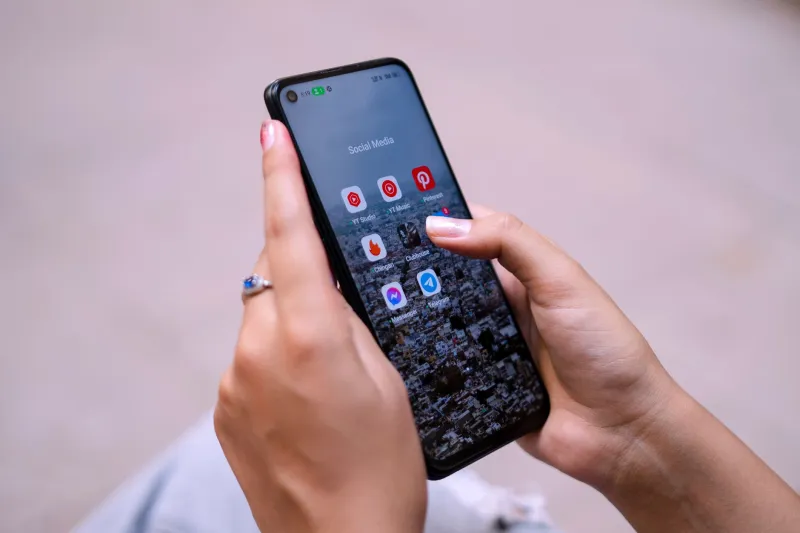
Pull out your phone right now and check your casino app's notification history — if you still have notifications on, that is. There's a decent chance the timestamps tell a story: a nudge at 12:10 on a Wednesday, a "free spins waiting" ping around 8:45 on a Monday morning, a deposit reminder the same Friday your paycheck cleared.
None of that is a coincidence. US online casinos have gotten remarkably good at scheduling push notifications, and the timing is less about when a promo drops and more about when you tend to be vulnerable, bored, or flush with cash. Understanding the pattern is the first step to taking your schedule back.
The 12:15 Bonus Isn't Thinking About Your Sandwich
The weekday lunchtime notification is one of the most reliable patterns in the industry. Between roughly 11:30 a.m. and 1:00 p.m. local time, engagement across gaming apps spikes — people are on breaks, away from their desks, and scrolling with one hand while eating with the other.
Casinos don't need to guess at this. App analytics platforms segment users by session history, so if you've ever opened the app during lunch, the system has flagged you as a "midday player." From there, it's simple automation: send the "you've been missed — here's 25 free spins" message at 12:15, because that's the window where you're most likely to tap it.
The behavioral science term here is the habit loop: cue, routine, reward. Your lunch break is the cue, opening the app is the routine, and the free spins are the reward. The notification isn't reminding you of anything — it's training you. Do that loop enough times and you'll start reaching for the app at noon even without a ping.
Payday Friday: The Cash-On-Hand Window
The second big timing pattern is more pointed. Deposit reminders, reload bonus offers, and "your bonus expires tonight" alerts cluster heavily around the first and fifteenth of the month, and around Fridays in general — the traditional biweekly payday for a huge chunk of American workers.
This isn't sophisticated profiling; it's calendar math applied at scale. But it works because it aligns the casino's ask with the moment your bank account is fullest and your resistance to a $20 deposit is lowest. A deposit match that felt irrelevant on Wednesday — when you were watching your balance ahead of bills — suddenly feels reasonable at 5:30 p.m. on payday.
Some platforms go further. If your deposit history shows a pattern (say, you tend to load $50 after your Friday shift), the app can quietly schedule its strongest offers for that exact window. Your payday becomes their campaign launch.
The 3 A.M. Problem
Late-night notifications deserve their own mention. Several states' regulated online casinos have faced scrutiny for sending promotional pushes during overnight hours, when impulse control is at its worst and the "limited time" framing hits hardest. Regulators in a few markets have pushed back, and some operators now throttle overnight promos — but plenty of apps still treat 11 p.m. as prime time, especially for "tonight only" offers.
If a message only works on you when you're tired, that tells you something about the message.
Taking Back Control: The Practical Playbook
The good news: every one of these tactics depends on your phone's notification settings, and those belong to you. Here's the sequence we'd actually recommend:
1. Turn off marketing notifications entirely, keep transactional ones. In your phone's settings (not the app's — go to iOS or Android notification controls), you can usually strip the app down to essentials: withdrawals, security alerts, account confirmations. Bonus offers are not essential. You'll find them when you look for them.
2. Check the app's own notification preferences too. Many casino apps let you opt out of "promotions" specifically while keeping account alerts. It's buried, but it's there — and opting out here often removes you from the timing algorithm's targeting pool.
3. Audit your email inbox on a schedule you choose. If a bonus is genuinely good, it'll survive being discovered on your terms — say, a Sunday-morning sweep of the promotions folder. Nothing legitimate expires in the ninety minutes between a push notification and your next phone unlock.
4. Set your own play window. If you enjoy a session, decide in advance when it happens — and notice how different that feels from responding to a 12:15 ping. One is a plan; the other is a reflex. Same $20 budget, completely different psychology.
5. Notice the payday pattern in yourself. For one month, just observe when you feel like depositing. If the urge reliably spikes on Friday evenings, that's not your gambling instinct talking — that's a schedule you absorbed. Awareness alone blunts a lot of it.
Your Calendar, Your Rules
None of this means online casinos are villains — the regulated US market is full of people who play casually and enjoy it. But there's a real difference between choosing to play and being scheduled into playing, and push notification timing is engineered to erase that difference.
The lunchtime bonus and the payday deposit match work because they borrow the rhythms of your actual life — your break, your paycheck, your tired evenings. Cut the notifications, keep the fun, and let the only schedule that governs your play be the one you wrote yourself.