Who's Actually Feeding That Jackpot Meter? A Casual Player's Tour Behind the Ticking Numbers
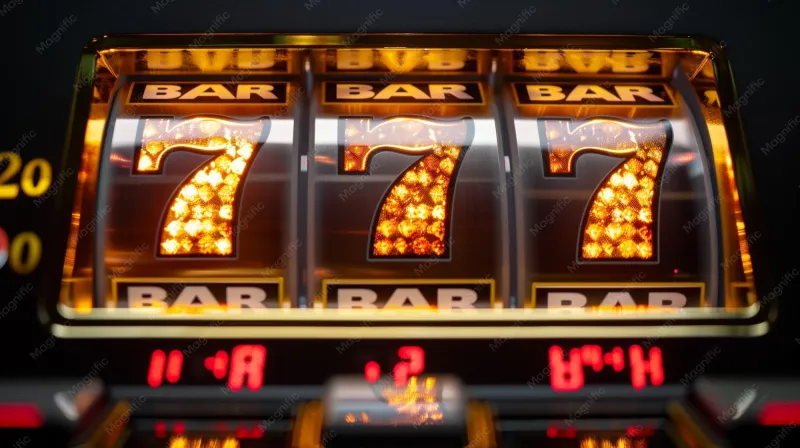
Photo: casino slot machine jackpot display glowing numbers, via img.freepik.com
You've seen the number. Maybe it was $4.2 million on a Mega Moolah-style game, or a more modest $38,000 sitting on a linked bank of slots at a casino in Atlantic City or a tribal gaming floor out west. Either way, the meter ticks up while you watch, and part of your brain whispers the same thing it whispers to everyone: somebody's going to win that, why not me?
Fair question. But before you answer it with your wallet, it's worth understanding what that ticking number actually is — because once you see how the sausage gets made, the meter looks a lot less like a countdown and a lot more like a thermometer reading the room temperature of everyone else's losses.
The Meter Isn't the Casino's Money
First thing to know: a progressive jackpot is almost never funded by the house. It's funded by players. Every qualifying spin routes a small slice of the bet into the jackpot pool, and the meter simply displays the running total. That's why it climbs continuously even at 3 a.m. on a Wednesday — thousands of players across a linked network are all chipping in at once.
The typical contribution rate on a wide-area progressive is somewhere between 1% and 3% of each wager. So if you're spinning $1 a pull on a linked machine, roughly a dime to a nickel per ten spins is heading into the pot. Multiply that by every player on every connected machine in every state the network covers, and you understand why these jackpots can hit eight figures. It's not generosity. It's aggregation.
Seeds: The Part of the Jackpot That's Real
Here's where it gets interesting. When a progressive hits and resets, it doesn't drop to zero. It resets to its seed amount — a guaranteed floor the casino or game provider puts up. A game might seed at $500,000 and climb from there.
So when the meter reads $4.2 million, what you're really looking at is $500K of the operator's money and $3.7 million contributed by players like you. Neither number is fake, exactly. But the seed is doing marketing work: it makes the jackpot look permanently enormous, which keeps people spinning even right after a win, when the pool is at its thinnest.
Think of the seed like the base salary in a job posting. It's real, but it's the least impressive part of the pitch.
'It's Due' Is the Most Expensive Sentence in Gambling
The meter climbing tells you one thing and one thing only: money is going in. It says nothing about when money is coming out.
Most modern progressive slots use a random number generator that treats every spin independently. The jackpot isn't a pot that must be won by a certain point — it's a lottery drawing that happens on every spin, with odds that don't budge whether the meter reads $500K or $5 million. (A handful of older or specialty games do have must-hit-by thresholds, and those genuinely do get more attractive as the ceiling approaches — but they're the exception, and they'll usually say so on the paytable.)
The gambler's-brain version of this is like watching a coin come up heads nine times and betting heavy on tails. The coin doesn't know. Neither does the slot.
The Math Check a Casual Player Can Actually Do
You don't need a statistics degree to run a quick sanity check. Ask three questions:
1. What's the contribution rate? Often disclosed in the help screen or paytable, sometimes not. If a game is famously tight on base-game wins and its jackpot climbs fast, that's your answer about where the money's going.
2. What does the jackpot do to the base game? Money routed to the meter is money not returning as regular wins. Some progressives pay a slightly lower RTP on the non-jackpot portion to fund the pool. You're trading frequent small hits for a lottery ticket stapled to your session.
3. Does the meter change your odds — or just your daydreams? On most games, it's purely the second one. A bigger number is more exciting, not more winnable.
When a Big Meter Is Worth Your Dollar
To be fair to progressives, there are moments when the math tilts slightly toward the player. If a game has a must-hit-by cap, the last stretch before the ceiling is the one time the expected value genuinely improves. If you're going to play that game anyway at your normal bet size, playing it while the meter is fat costs you nothing extra.
And there's a legitimate entertainment argument: for the price of the same $20 session, you get a shot — however long — at a life-changing number. If that's the fun you're buying, buy it with open eyes. Just know you're buying a lottery ticket with better graphics, not an investment with a ticking clock.
What you shouldn't do is chase the meter upward — increasing bets, extending sessions, or hopping casinos because one location's jackpot is $2,000 higher. That $2,000 difference on a $3 million pool is rounding error, but the extra spins you burn chasing it are real money out of your real bankroll.
The Honest Read on the Ticking Number
The progressive meter is one of the best pieces of theater in American gambling. It's transparent — you can literally watch the money pool — and that transparency is exactly what makes it persuasive. But transparency isn't the same as a signal. The number going up means players are putting money in. Full stop.
Enjoy the show. Take your shot if the fantasy is worth the price of a session. But when the meter starts ticking and your brain says it's getting close, remember what it's actually counting: everybody else's Tuesday night.